

Employment scams are increasing, and scammers are devising new methods to target unsuspecting job seekers. Recently observed scams more frequently begin with a text message, initiating conversations about a potential job opportunity. The scammer claims to be a recruiter who expresses interest in the target’s compatibility for a vacant position and attempts to ascertain the target’s willingness to explore the opportunity further. The message outlines the position's benefits, which include remote work, flexible hours, and potential average daily pay ranging from $100 to $1,000 or more.
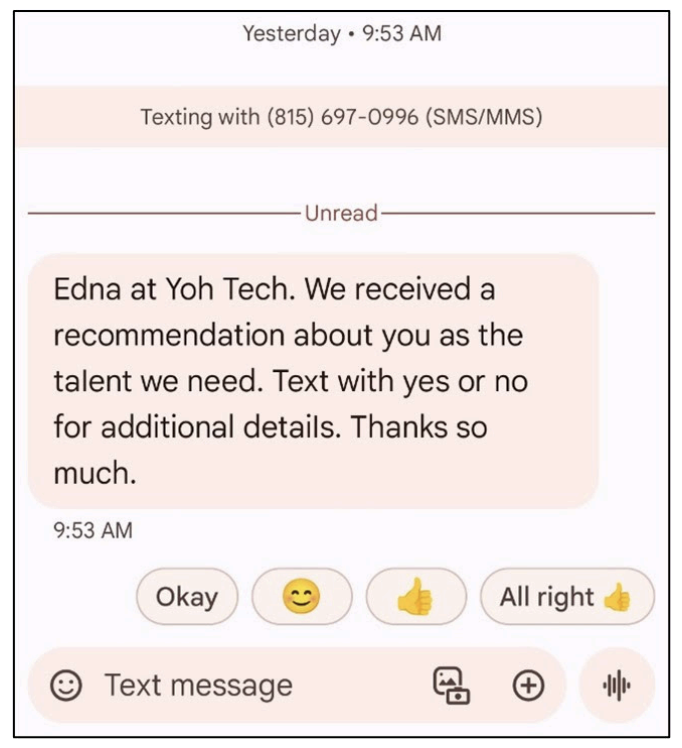
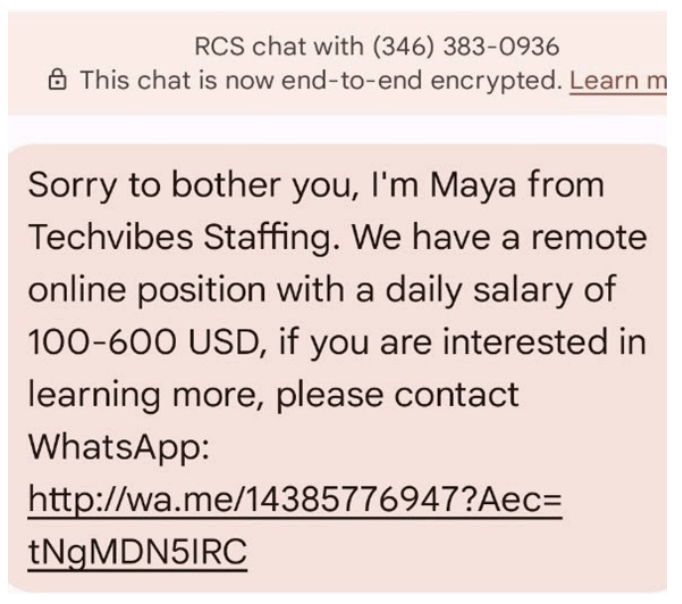
They may inquire about work experience, salary expectations, and other typical employment concerns. To avoid detection, they often request to continue the conversation on an encrypted chat platform like WhatsApp. Legitimate companies typically do not request that applicants send materials through instant messaging services.
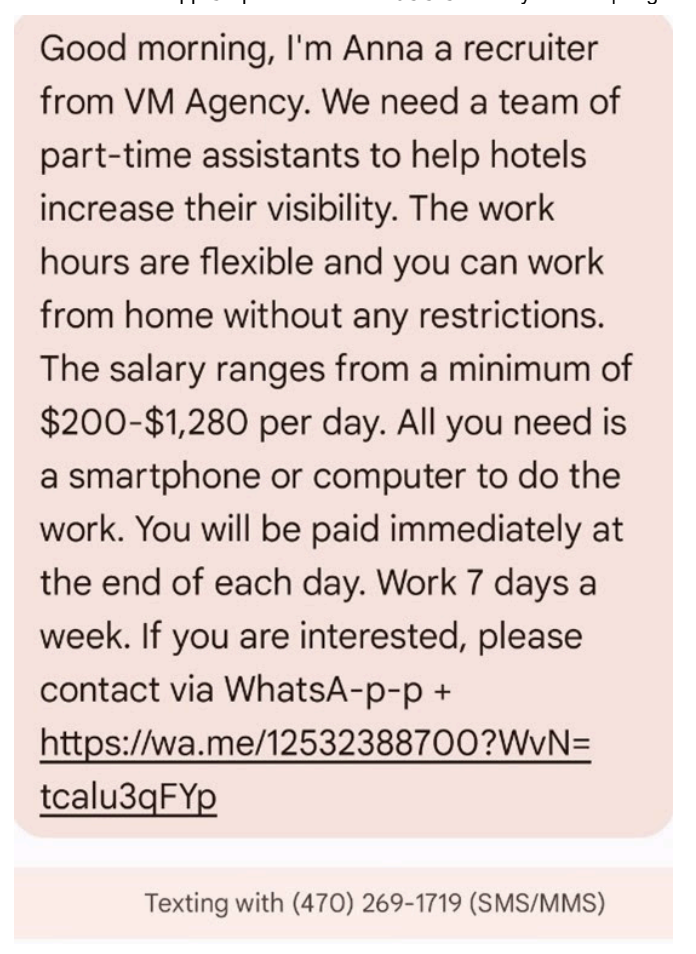
Once the conversation moves to a different platform, they may ask for personal information, such as a Social Security number (SSN), a photo of the target’s driver’s license, and banking details, claiming they need to set up direct deposit. Scammers may also ask job seekers to pay processing or application fees or to pay for training. The victim may receive a fraudulent invoice for equipment, with instructions to pay using cash, Zelle, or PayPal and a promise of reimbursement.
Consumer advocates warn that a weakening US labor market may make job seekers more susceptible to these scams. According to the Federal Trade Commission (FTC) data, consumers have lost nearly $24 million to job and employment agency text scams this year. Users are more likely to read text messages than answer phone calls, making text messages a preferred contact method for scammers. Recent data from the Identity Theft Resource Center shows that the number of reported job scams increased by 118 percent from 2022 to 2023, and researchers predict a further increase this year.
Recommendations
- Educate yourself and others about these and similar scams. Legitimate businesses typically will not ask you to contact them via social media platforms.
- Refrain from clicking on or contacting unknown telephone numbers found in unsolicited pop-up notifications, or links and attachments delivered via emails or text messages.
- Avoid downloading software at the request of unknown individuals, and refrain from divulging sensitive information or providing funds.
- Confirm the legitimacy of requests by contacting the careers section of a company’s official website or consider calling the company’s human resources department to verify if the job offer is legitimate.
- Report malicious cyber activity to the FTC, FBI's IC3, and the NJCCIC.