
Public service
Intelligence Feed
TeliApp consolidates information from multiple cybersecurity threat intelligence feeds — commercial, open-source, and government — and publishes anything we believe is useful to the public right here. No login. No paywall. No tracking pixels.
Free for everyone.
What we ingest
CISA KEV, MS-ISAC advisories, vendor PSIRT bulletins, open-source threat feeds, and our own field telemetry from defending New Jersey agencies.
What we publish
Plain-English summaries of active threats, scams targeting government agencies and residents, and patch guidance that anyone can act on.
Who it's for
Local government staff, small business owners, school administrators, and residents who want a trustworthy signal without the marketing noise.
Archive
841 advisories
 Oct 22, 2026PhishingScams
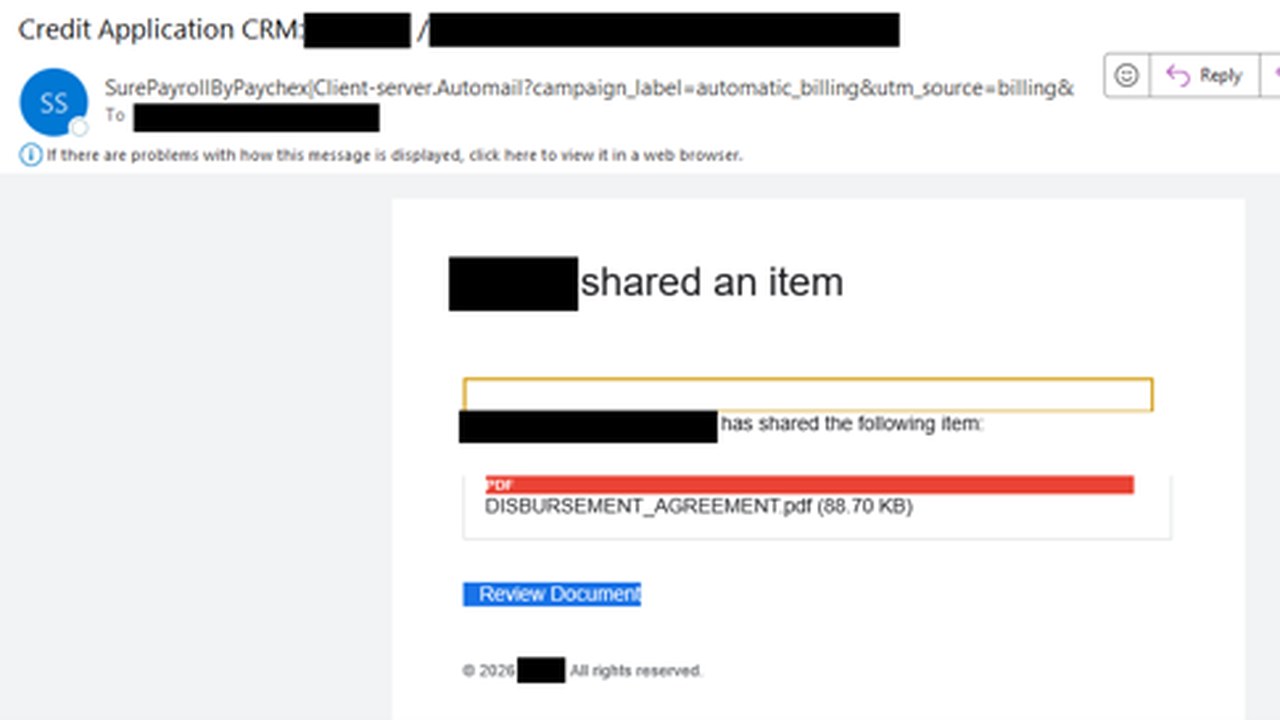
Generic Phishing Emails Use Adobe PDF Pretext to Deliver Malicious Links
The NJCCIC identified a phishing campaign that uses generic messaging to prompt recipients to act. The message does not identify the sender, the organization it purports to represent, or the purpose of the invitation. By keeping the content generic, attackers can distribute the same template to…
 Oct 22, 2026ScamsPhishing
Threat Actors Impersonate New Jersey Organizations to Redirect Payments
In the past week, the NJCCIC observed an uptick in threat actors impersonating multiple New Jersey organizations to redirect legitimate payments and steal funds, resulting in significant financial losses. Threat actors leverage publicly available information to identify and target potential victims…
 Oct 21, 2026VulnerabilitySecurity
Multiple Vulnerabilities in PHP Could Allow for Remote Code Execution
Multiple vulnerabilities have been discovered in PHP, the most severe of which could allow for remote code execution. PHP is a widely-used, open-source server-side scripting language designed primarily for web development. All PHP installations serving web requests, including PHP-FPM, Apache with mo
 Oct 21, 2026VulnerabilitySecurity
PHP2Shell: Critical PHP Vulnerabilities Could Allow Unauthenticated Remote Code Execution
Two critical vulnerabilities in PHP, tracked as CVE-2026-109618 and CVE-2026-109619 , could allow unauthenticated threat actors to remotely execute code on vulnerable web servers. PHP is a widely used server-side scripting language that supports websites, content management systems, and web…
 Oct 20, 2026RansomwareSecurity
CISA and Partners Release Joint Advisory on SafePay Ransomware Activity
The Cybersecurity and Infrastructure Security Agency (CISA), the Federal Bureau of Investigation (FBI), the US Secret Service (USSS), and international partners released a Joint Cybersecurity Advisory detailing SafePay ransomware activity, including known TTPs, IOCs, incident response actions, and…
 Oct 19, 2026VulnerabilitySecurity
Critical BeyondTrust Remote Support Authentication Bypass Actively Exploited
A Cybersecurity and Infrastructure Security Agency (CISA) alert has been provided to assist agencies and organizations in guarding against the persistent malicious actions of cybercriminals. CISA has been made aware of a critical authentication bypass vulnerability CVE-2026-102764 , affecting…
 Oct 15, 2026Critical InfrastructureGlobal Attacks
Cyberattack on Refrigeration Control Systems Hits Supermarkets Across Europe
Cyber threat actors exploited a vulnerability in refrigeration control panels that impacted multiple supermarket chains across Europe. Threat actors raised the temperature of freezers and refrigerators overnight to 122 degrees Fahrenheit (50 degrees Celsius) . Central control panels are often used…
 Oct 15, 2026PhishingMalware
Spoofed IRS Emails Deliver ScreenConnect Remote Access Trojan
The NJCCIC observed a phishing campaign that begins with an urgent-sounding message: "Final Notice: Your Tax Document(s) Is Now Available." The sender is identified as the "Internal Revenue Service," creating an immediate impression of authority and urgency. However, closer inspection reveals a…
 Oct 15, 2026PhishingScams
Threat Actors Abuse Microsoft 365 Direct Send to Deliver Credential Phishing
Direct Send is a legitimate Microsoft 365 feature that allows devices, applications, and third-party services to send emails directly to users’ mailboxes without requiring authentication or account compromise. The NJCCIC received a report in which threat actors exploited the legitimate Direct Send…
 Oct 14, 2026VulnerabilitySecurity
Multiple Vulnerabilities in Google Chrome Could Allow for Arbitrary Code Execution
Multiple vulnerabilities have been discovered in Google Chrome, the most severe of which could allow for arbitrary code execution. Successful exploitation of the most severe of these vulnerabilities could allow for arbitrary code execution in the context of the logged on user. Depending on the privi
 Oct 13, 2026VulnerabilitySecurity
Actively Exploited Vulnerability in Ivanti Connect Secure Could Allow for Arbitrary Code Execution
A vulnerability has been discovered in Ivanti Connect Secure (ICS) that could allow for arbitrary code execution. Ivanti Connect Secure is an enterprise-grade SSL VPN and zero-trust remote access gateway. Successful exploitation of this vulnerability could allow a remote unauthenticated attacker to
 Oct 13, 2026VulnerabilitySecurity
Critical Patches Issued for Microsoft Products, October 2026
Multiple vulnerabilities have been discovered in Microsoft products, the most severe of which could allow for remote code execution. Successful exploitation of the most severe of these vulnerabilities could result in an attacker gaining the same privileges as the logged-on user. Depending on the pri
 Oct 13, 2026VulnerabilitySecurity
Multiple Vulnerabilities in Adobe Products Could Allow for Arbitrary Code Execution
Multiple vulnerabilities have been discovered in Adobe products, the most severe of which could allow for arbitrary code execution.
 Oct 12, 2026VulnerabilitySecurity
Actively Exploited Vulnerability in Atlassian Data Center Products Could Allow for Arbitrary File Access
A vulnerability in Atlassian Data Center products could allow for arbitrary file access. Atlassian Data Center products are self-managed, enterprise-grade editions of Atlassian tools such as Jira, Confluence, Bitbucket, and Jira Service Management, which organizations host on their own…
 Oct 12, 2026VulnerabilitySecurity
CISA Updates Guidance on Actively Exploited Citrix NetScaler ADC and Gateway Vulnerabilities
The Cybersecurity and Infrastructure Security Agency (CISA) has updated their October 9th alert to: (1) include CVE-2026-107406 ; (2) include CVE-2026-88779 following its addition to the Know Exploited Vulnerability (KEV) Catalog on October 4; (3) clarify the potential relationship between…
 Oct 9, 2026VulnerabilitySecurity
A Vulnerability in Citrix NetScaler ADC and NetScaler Gateway Could Allow for Remote Code Execution
A vulnerability has been discovered in Citrix NetScaler Application Delivery Controller (ADC) and Citrix NetScaler Gateway that could allow for remote code execution. Citrix NetScaler ADC (Application Delivery Controller) is an enterprise networking platform and traffic management device designed to
 Oct 8, 2026HackersGlobal Attacks
Joint Advisory on Integrity Tech-Enabled Malicious Cyber Activity
The Federal Bureau of Investigation (FBI), Cybersecurity and Infrastructure Security Agency (CISA), National Security Agency (NSA), and international partners released a Joint Cybersecurity Advisory detailing malicious cyber activity enabled by the Integrity Technology Group (Integrity Tech), a Chi
 Oct 8, 2026PhishingMalware
Spoofed Payment Notifications Deliver Action1 RMM Software
The NJCCIC observed a phishing campaign that uses spoofed financial notifications to deliver remote monitoring and management (RMM) software to victim systems. By masquerading as legitimate payment confirmations, the campaign misleads recipients into executing multi-stage payloads that ultimately le
 Oct 8, 2026PhishingScams
Typosquat Domains Impersonate New Jersey State Government Agencies
Over the last several weeks, the NJCCIC has observed an increase in typosquat domains impersonating New Jersey State government agencies. Typosquatting, or domain impersonation, occurs when threat actors register a domain name that visually resembles a trusted organization's official website. These
 Oct 7, 2026VulnerabilitySecurity
Multiple Vulnerabilities in Google Chrome Could Allow for Arbitrary Code Execution
Multiple vulnerabilities have been discovered in Google Chrome, the most severe of which could allow for arbitrary code execution. Successful exploitation of the most severe of these vulnerabilities could allow for arbitrary code execution in the context of the logged on user. Depending on the privi
 Oct 2, 2026VulnerabilitySecurity
A Vulnerability in Fortinet FortiMail Could Allow for Arbitrary Code Execution
A vulnerability has been discovered in Fortinet FortiMail that could allow for arbitrary code execution. Fortinet FortiMail is a secure email gateway that protects organizations from inbound threats including spam, phishing, malware, and business email compromise, while also preventing outbound data
 Oct 1, 2026VulnerabilitySecurity
A Vulnerability in Kiteworks Email Protection Gateway Could Allow for Arbitrary Code Execution
A vulnerability has been discovered in Kiteworks EPG (Email Security Gateway) that could allow for arbitrary code execution. Kiteworks Email Protection Gateway (EPG) is a cloud-based security solution that automates end-to-end encryption, decryption, and policy enforcement for inbound and outbound e
 Oct 1, 2026VulnerabilitySecurity
A Vulnerability in WordPress Could Allow for Arbitrary Code Execution
A vulnerability has been discovered in WordPress that could allow arbitrary code on the web server. WordPress is a free, open-source content management system (CMS) that allows you to build and manage websites without needing to write code. Successful exploitation allows an unauthenticated attacker
 Oct 1, 2026MalwarePhishing
ClickFix Social Engineering Emerges as a Leading Initial Access Vector
A social engineering tactic known as ClickFix has rapidly emerged as one of the most prevalent initial access vectors for cybercriminals. Unlike traditional phishing, which seeks to steal credentials through fake login pages or to persuade users to download suspicious attachments, ClickFix evades se