
Consumers are taking advantage of popular retailers’ early access and pre-Black Friday deals. According to the National Retail Federation (NRF), nearly half of consumers began holiday shopping before November last year. Similar trends are expected this year as a recent NRF survey revealed that 39 percent of shoppers plan to start shopping earlier than they typically do this holiday season. Retailers and consumers are both feeling the strain of inflation. As a result, more sales events are being held to accommodate and attract customers planning to spread out their holiday shopping to manage associated costs.
According to a study conducted by Barclays, nearly half of the surveyed consumers admitted feeling pressured to make purchases quickly during Black Friday sales to avoid missing out on the best deals. The study further revealed that 42 percent of the participants were willing to buy from unknown vendors for a great deal rather than shop from trustworthy websites.
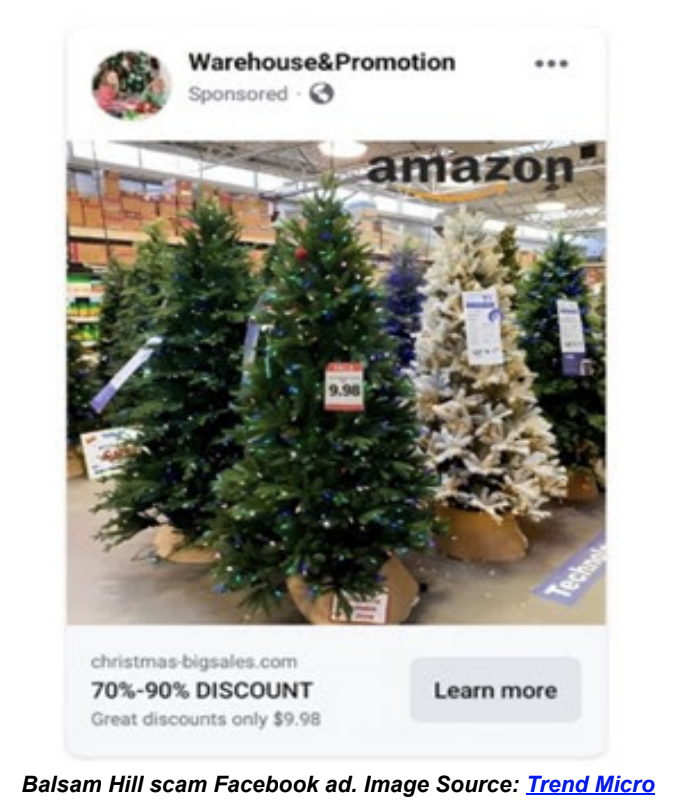
Cybercriminals are very active during this time of year, taking advantage of consumers engaged in online shopping, anticipating package deliveries, and often overwhelmed with additional plans. Scammers may send out fake order confirmations, issue phony tracking numbers, and set up fake websites impersonating legitimate retailers or promoting nonexistent ones to victimize shoppers. Between October 1 and November 1 this year, Trend Micro identified 34,896 URLs related to Black Friday scams – 10 percent more than what was observed during the same period last year. Additionally, the Better Business Bureau (BBB) received complaints regarding fake holiday shopping advertisements and decoration purchases. For example, scammers were observed impersonating Balsam Hill , a legitimate company that sells Christmas decorations, using the company’s name and branding to create copycat versions of the real Balsam Hill website. These fake websites were promoted via shared social media advertisements.
As you prepare for the holidays, keep in mind these basic best practices:
- Navigate to official websites and applications to make purchases, update information, or track a package’s status.
- If a deal seems too good to be true, it probably is! Avoid navigating to websites via shared social media posts.
- Check reputation and ratings prior to purchasing from an unknown retailer and verify the payments page is secure.
- If you have accidentally revealed your online account or banking details, change your passwords immediately, enable multi-factor authentication (MFA), and inform your banking institution.
- Additional information and recommendations regarding holiday scams can be found in the NJCCIC informational report, “Stay Cyber Safe This Holiday Season.”